
Slot Machine Paylines Explained: Types, How They Work & How Wins Are Formed
Slot machine paylines are the patterns that determine how winning combinations are formed in slot games. From classic horizontal paylines to modern 243 ways-to-win and Megaways mechanics, paylines directly affect win frequency, volatility, and betting strategy. Understanding the difference between fixed, adjustable, and multi-payline slots can help you choose games that match your budget and playstyle.
Slot machine paylines are one of the most important mechanics in any slot game. Whether you’re spinning classic 3-reel slots or modern video slots with hundreds of ways to win, paylines determine how winning combinations are formed and how payouts are awarded.
Understanding slot paylines can help you choose games that match your budget, risk tolerance, and playing style. Some players prefer simple 9 line slot paylines, while others enjoy high-action games with 243 paylines slots or Megaways mechanics.
In this guide, we’ll break down everything you need to know about slot machine paylines explained in simple terms, including payline types, win mechanics, volatility, and how to pick the right slot for you.
What Are Slot Machine Paylines?
Paylines are predefined patterns across the reels where matching symbols must land to create a winning combination. In traditional slots, paylines usually run horizontally from left to right. Modern video slots, however, use far more creative patterns, including diagonal, zigzag, and even vertical paylines.
If you’ve ever wondered what are paylines on slot machines, think of them as invisible paths that determine whether your spin results in a payout.
A classic example is a 3 reel slot machine paylines setup, where one straight horizontal line across the center reel forms the only payline. Modern 5 reel slot machine paylines are much more advanced and can include dozens or even hundreds of winning paths.
How Paylines Are Read and How Wins Are Formed
Most slot games evaluate wins from left to right. For example, if three matching symbols appear consecutively along an active payline, the game awards a payout according to the paytable.
Here’s a simplified slot machine paylines diagram example:
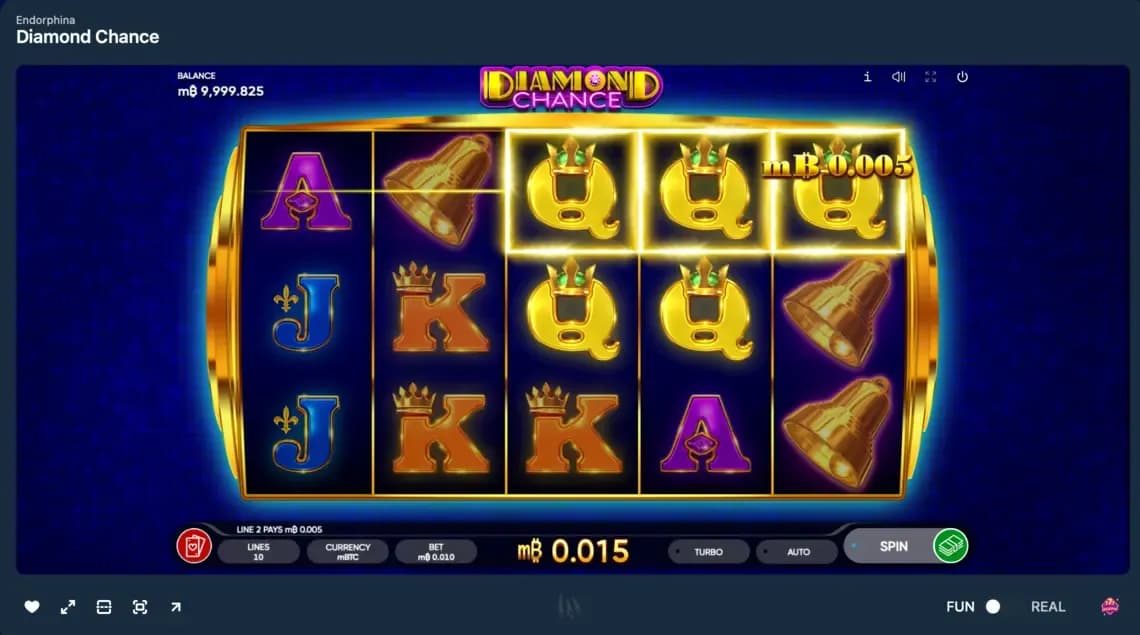
Diamond Chance slot game showing a winning horizontal payline combination across a 5-reel layout.
- Reel 1 → Reel 2 → Reel 3 → Reel 4 → Reel 5
- Matching symbols must land on the active payline pattern
- The more matching symbols you land, the larger the payout
Some slots also pay both ways, such as Gator Hunters or Neon Party, meaning combinations can form from left to right and right to left.
However, not all modern slots rely on traditional paylines. Cluster pays slots use a different mechanic entirely, where wins form when groups of matching symbols connect horizontally or vertically anywhere on the grid. Instead of following fixed payline patterns, cluster games reward symbol groups, often triggering cascading wins and chain reactions after combinations disappear.
Slot paylines explained simply:
- Active paylines determine where wins count
- More paylines create more winning opportunities
- Higher-paying symbols usually require fewer matches for bigger payouts
Real Wins vs False Wins
A real win occurs when your payout exceeds your total stake. A false win happens when the slot celebrates a payout, but the amount won is smaller than the total cost of the spin.
For example:
- Total bet: $1
- Win amount: $0.40
Even though the game shows a “win,” you still lost money overall. False wins are common in slot machines with multiple payline setups, such as Arctic Storm or Alien Fruits, because smaller symbol combinations trigger more frequently.
Types of Slot Paylines
Modern slots use many different payline patterns, and understanding how they work can make a huge difference when choosing a game. While classic slots typically relied on a single straight payline, today’s video slots use creative layouts that can include diagonal, zigzag, and even vertical combinations.
Learning the main payline types helps you quickly recognize:
- How wins are formed
- How often payouts may occur
- How volatile a slot might feel
- Whether the game suits your preferred playstyle
Some players enjoy the simplicity of traditional horizontal paylines, while others prefer modern slot machines with multiple paylines setups that create more action and winning opportunities on every spin.
Horizontal Paylines
Horizontal paylines are the most traditional and recognizable setup in slot games. These paylines run straight across the reels from left to right, usually across the top, middle, or bottom row of the slot grid.
Classic slot machines were built almost entirely around horizontal paylines because they’re simple to understand and easy to track during gameplay. Even today, many retro-inspired online slots still use this layout to recreate the feel of traditional casino machines.
Classic slots commonly use:
- 1 payline
- 3 paylines
- 5 paylines
- 9 line slot paylines
For example, a traditional 3 reel slot machine paylines setup may feature just one active horizontal line across the center row. Meanwhile, slightly more advanced classic video slots may use multiple horizontal lines stacked across the reels.
Horizontal paylines are especially popular among:
- Beginner players
- Fans of classic fruit machines
- Players who prefer lower-volatility gameplay
- Users looking for simpler slot mechanics
Because the patterns are straightforward, it’s much easier to recognize winning combinations instantly without needing to memorize complex paths.
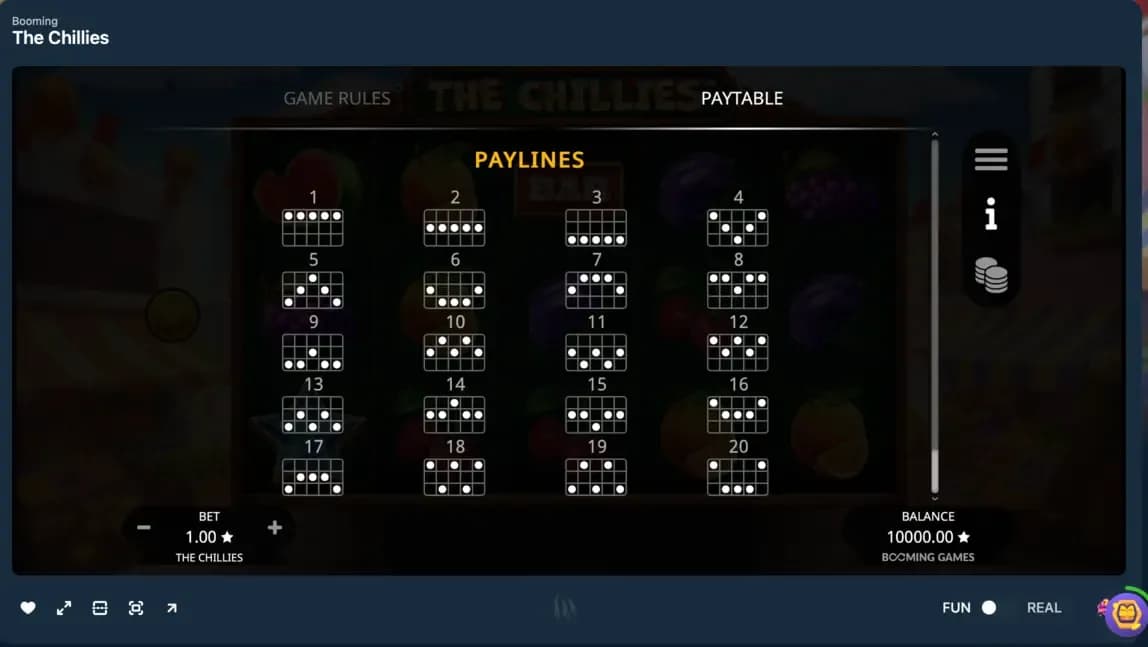
Slot machine paylines diagram from The Chillies showing 20 different payline patterns in a modern video slot game.
Diagonal Paylines
Diagonal paylines move upward or downward across the reels instead of staying in a straight horizontal line. These paylines add more variety to gameplay and allow slot developers to create additional winning patterns without dramatically increasing complexity.
Examples include:
- Bottom-left to top-right
- Top-left to bottom-right
Diagonal paylines became much more popular with modern 5 reel slot machine paylines because they helped increase the number of possible winning combinations while keeping gameplay intuitive.
For example, a winning combination may begin on the bottom row of the first reel and continue diagonally upward toward the fifth reel. This creates more excitement compared to traditional straight-line slots because wins can appear in less predictable ways.
Many modern video slots combine diagonal paylines with:
- Horizontal paylines
- Zigzag paylines
- V-shaped paylines
- Complex multi-directional layouts
These additional patterns increase hit frequency and make gameplay feel more dynamic without changing the core slot mechanics.
Zigzag Paylines
Zigzag paylines create more complex patterns that move up and down across the reels instead of following a straight path. These paylines are designed to maximize the number of possible combinations and create more visually engaging gameplay.
For example:
- Top row → middle row → bottom row → middle row → top row
Modern video slots often rely heavily on zigzag paylines because they allow developers to fit dozens of paylines into a single game layout. Many 20-, 30-, and 50-payline slots use zigzag patterns extensively.
These paylines help create:
- More frequent winning combinations
- More varied reel movement
- Higher entertainment value
- Faster-paced gameplay
Zigzag paylines are especially common in:
- Adventure-themed video slots
- Bonus-heavy slots
- High-volatility games
- Multi-payline slot machines
Although the patterns may look complicated at first, most online slots include a slot machine paylines diagram inside the paytable so you can easily view every active line before spinning.
Vertical Paylines
Vertical paylines are less common than horizontal or zigzag patterns, but they still appear in some modern slot games. Instead of running across the reels, these paylines form vertically within sections of the slot grid.
This means symbols align from top to bottom rather than left to right.
Vertical paylines are more commonly found in:
- Grid-based slots
- Cluster pays games
- Innovative modern video slots
- Alternative reel layouts
Because vertical paylines work differently from traditional line systems, they’re often combined with:
- Cascading reels
- Expanding grids
- Cluster mechanics
- Alternative ways-to-win systems
While they may seem unusual at first, vertical paylines can create additional winning opportunities and make gameplay feel less repetitive compared to traditional slot layouts.
Some modern developers use vertical paylines to build highly interactive bonus features and more unique reel mechanics that stand out from classic slot formats.
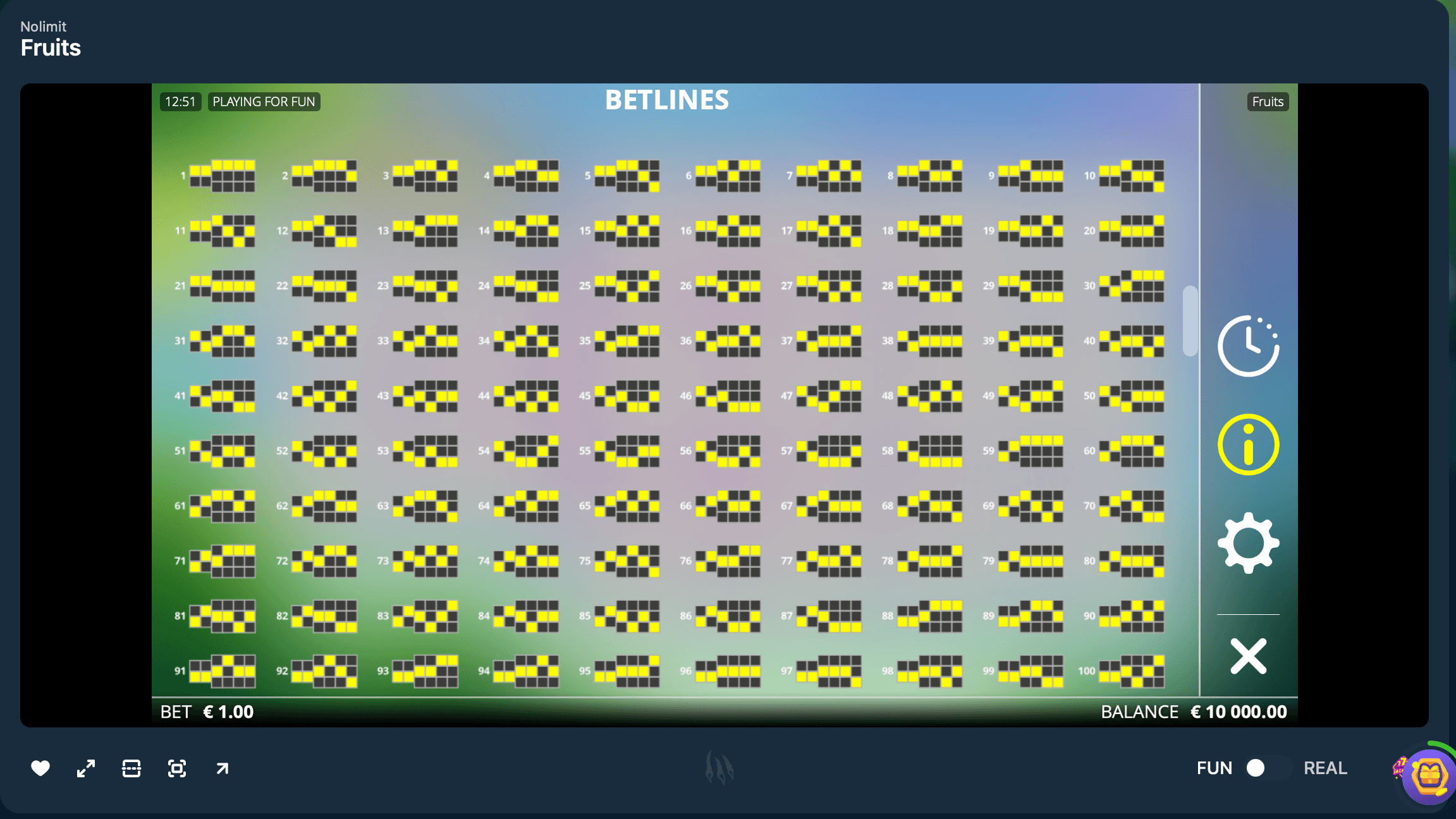
A 100-payline slot machine layout from Fruits showing multiple horizontal, diagonal, and zigzag betting lines.
Payline Configuration Types
Not all slot games use paylines the same way. While some slots keep things simple with a fixed number of active lines, others allow players to customize how many paylines they want to play on each spin. The way a slot handles paylines directly affects gameplay, betting flexibility, and overall winning potential.
Understanding different payline configuration types can help you:
- Control your total bet size
- Adjust your risk level
- Choose between simpler or more action-packed gameplay
- Find slots that match your bankroll and playing style
For example, classic slots often feature fewer paylines and simpler betting structures, while modern video slots may include dozens or even hundreds of active paylines automatically. Some games also let you activate or deactivate paylines manually, giving you more flexibility over your wagering strategy.
Whether you prefer single-line classics or slot machines with multiple payline setups with nonstop action, knowing how these configurations work makes it easier to pick the right game before you start spinning.
Fixed Paylines
Fixed paylines are always active and cannot be turned on or off by the player. This means every spin automatically covers all available paylines in the game, giving you access to every possible winning combination.
Many modern slots, including Fire Joker, use fixed paylines because they:
- Simplify gameplay
- Increase action frequency
- Ensure players always have maximum winning coverage
For example, if a slot has 25 fixed paylines, all 25 lines are active on every spin automatically. You can still adjust your total stake by changing the bet size, but the paylines themselves remain locked in place.
Fixed paylines are especially common in modern video slots because they create a smoother and more beginner-friendly experience. They also prevent players from missing payouts on inactive lines, which was more common in older adjustable-payline games.
If you’re researching the difference between fixed and adjustable paylines, fixed paylines remove the need to manually choose active lines before spinning.
Adjustable Paylines
Adjustable paylines slots like Fire Lightning allow players to choose how many paylines they want active during each spin. Unlike fixed-payline games, this setup gives you more flexibility over both your betting strategy and total wager.
This setup gives you more control over:
- Total bet size
- Risk level
- Number of winning opportunities
For example, you might activate:
- 10 paylines instead of 20
- 5 paylines instead of 9
Using fewer paylines lowers the total cost per spin, which can help stretch your bankroll. However, it also reduces the number of possible winning combinations.
Adjustable paylines were far more common in older video slots, though some modern games still use them for players who prefer more customizable betting options.
Single-Line Slots
Single-line slots feature only one payline, usually running horizontally across the middle row of the reels. To win, matching symbols must land directly on that single active line.
These games are most commonly associated with traditional casino machines and old-school slot gameplay, where simplicity is the main focus rather than complex bonus mechanics or massive payline structures.
Single-line slots are common among:
- Classic fruit slots
- Vintage casino machines
- Simpler low-volatility games
Because there’s only one active payline, gameplay is very easy to follow. Players can instantly recognize winning combinations without needing to track multiple patterns across the reels.
Single-line slots also tend to feature:
- Smaller overall bets
- Lower hit frequency
- Simpler bonus features
- More traditional slot mechanics
While modern video slots often focus on slot machines with multiple paylines and advanced win systems, single-line slots remain popular with players who enjoy a more classic and straightforward casino experience.
Multi-Payline Slots
Multi-payline slots include multiple active paylines spread across the reels, creating far more winning possibilities than traditional single-line games. Instead of relying on just one horizontal line, these slots can include diagonal, zigzag, and other complex payline patterns.
Popular configurations include:
- 20 paylines online slot machines list
- 30 paylines online slot machines list
- 50 paylines online slot machines list
- 6 paylines online slot machines list
- 9 paylines online slot machines list
The more paylines a slot has, the more opportunities there are for matching symbols to form winning combinations on every spin. This is why modern video slots often feel faster-paced and more action-packed compared to classic slots.
Multi-payline slots typically offer:
- More frequent payouts
- More dynamic gameplay
- Higher overall betting flexibility
- More bonus-trigger opportunities
While wins may occur more often, they’re also commonly smaller on average because payouts are spread across many paylines. This balance between hit frequency and payout size is one of the defining features of modern slot machines multiple paylines systems.
Bonus Features and Paylines
Bonus features can dramatically change how paylines behave during gameplay, often increasing your chances of forming winning combinations. Modern slots frequently combine paylines with special mechanics like wilds, scatters, free spins, and multipliers to create more dynamic and rewarding gameplay.
These features can expand winning paths, boost payouts, or even bypass traditional paylines entirely during bonus rounds, making them a major part of how modern slot games deliver bigger wins and more excitement.
Bonus Symbols
Special symbols can improve winning potential beyond standard paylines and are one of the biggest reasons modern slots feel more dynamic than classic machines. These symbols often activate bonus features, increase payouts, or help create winning combinations that wouldn’t normally form on regular paylines.
Common examples include:
- Wild symbols that substitute for other symbols
- Scatter symbols that trigger features anywhere on the reels
- Expanding wilds that cover entire reels
Wild symbols are especially valuable because they can replace missing symbols in a combination and help complete winning paylines. Scatter symbols work differently, as they usually don’t need to land on a specific payline to trigger bonuses like free spins or mini-games.
Some slots also include stacked or expanding wilds that can cover entire reels, dramatically increasing the number of active winning combinations during a spin.
Because of these mechanics, bonus symbols can create payouts even when paylines appear broken at first glance, adding more excitement and unpredictability to gameplay.

Scatter symbols triggering a bonus feature in Grand Buffalo Hold and Win without needing to land on a specific payline.
Free Spins and Multipliers
Free spins and multipliers are some of the most popular slot features because they can significantly boost winning potential during bonus rounds. These features often modify or enhance paylines to create more payout opportunities than standard gameplay.
Free spins often enhance paylines through:
- Additional wilds
- Expanded reels
- Higher multipliers
- Increased winning paths
For example, some slots add stacked wilds or extra reels during free spins, making it easier to form winning combinations across active paylines. Multipliers can also increase the value of every win by applying boosts like 2x, 5x, or higher to payouts.
Some slots temporarily add more paylines during bonus rounds, while others apply multipliers to every active line, creating the potential for much larger wins.

Free spins feature activated by scatter symbols in Triple Juicy Drops with multipliers and bonus mechanics.
Ways to Win Beyond Paylines
Modern slots often replace traditional paylines entirely, using alternative win mechanics that create more flexible and dynamic gameplay. Instead of requiring symbols to land on exact payline patterns, these systems reward wins based on adjacent reels, symbol clusters, or expanding reel layouts.
These newer mechanics are especially popular in modern video slots because they increase winning possibilities, create more action on every spin, and allow developers to build larger and more interactive bonus features.
Ways to Win (243, 1024, etc.)
Instead of requiring symbols to land on exact paylines, “ways to win” systems pay whenever matching symbols land on adjacent reels, regardless of their exact position.
This is one of the biggest differences in slot paylines and ways to win mechanics, as these systems remove the need for traditional payline patterns entirely.
Examples include:
- 243 paylines slots
- 1024 ways to win
- 4096 ways systems
The more reels and symbol positions a game includes, the more potential winning combinations become available. These games are extremely popular because they create more frequent payouts and easier-to-follow gameplay compared to complex payline structures.

Burning Chilli 243 slot game displaying a 243 ways-to-win mechanic with matching lemon symbols creating a winning combination across adjacent reels.
Megaways
Megaways slots dynamically change the number of symbols on each reel during every spin, meaning the total number of winning combinations constantly changes as you play.
This creates:
- Thousands of possible win combinations
- Cascading reels
- Randomized layouts
Because reel heights shift on every spin, some Megaways games can exceed 100,000 ways to win in a single round. These slots are known for fast-paced gameplay, large win potential, and highly volatile bonus features.

Great Buffalo Megaways slot rules screen explaining how winning combinations are formed without traditional paylines.
Cluster Pays
Cluster pays slots remove paylines completely and use a grid-based system instead.
Instead, wins form when groups of matching symbols connect horizontally or vertically. These games often include:
- Cascading wins
- Chain reactions
- Expanding grids
After a winning cluster disappears, new symbols drop into place, potentially creating additional combinations in the same spin. Cluster mechanics are especially common in highly volatile modern video slots with more interactive gameplay styles.

Cluster pays slot gameplay in Gates of Olympus showing tumble wins and connected symbol combinations without traditional paylines.
How Paylines Affect Volatility and RTP
The number of paylines directly influences how often wins occur and how a slot feels during gameplay. In general, slots with more paylines tend to produce more frequent winning combinations, while games with fewer paylines often rely on bigger but less common payouts.
Generally:
- More paylines = more frequent wins
- Fewer paylines = larger but less frequent payouts
For example, a slot with 50 paylines may trigger small wins regularly because there are far more possible symbol combinations on every spin. In contrast, a classic single-line slot may go longer without paying but can sometimes offer larger rewards when winning combinations finally land.
However, paylines alone do not determine profitability. RTP (Return to Player) and volatility are equally important when evaluating a slot game.
For example:
- A slot with 50 paylines may still have high volatility
- A single-line slot may produce larger but rarer jackpots
Volatility refers to how often and how much a slot typically pays. High-volatility slots usually feature bigger payouts but longer losing streaks, while low-volatility games tend to produce smaller, steadier wins.
RTP, meanwhile, represents the theoretical percentage of wagered money a slot returns to players over time. A slot with many paylines may still have a lower RTP than a simpler game, depending on its design.
Understanding the common number of paylines in slot machines helps you identify games that fit your preferred balance of risk, win frequency, and overall gameplay style.
How to Choose the Right Payline Slot Machine for You
Different slot structures suit different types of players. Some players prefer simple classic slots with fewer paylines and straightforward gameplay, while others enjoy modern video slots packed with hundreds of winning combinations, bonus features, and dynamic mechanics.
Choosing the right slot often comes down to your budget, preferred win frequency, and overall risk tolerance. Understanding how paylines affect betting, volatility, and payout potential can help you find games that match your playing style and make your sessions more enjoyable.
Budget and Bet Sizing
More paylines usually increase your total stake per spin because each active payline contributes to the overall wager. Even small bet amounts can add up quickly when dozens of paylines are active at the same time.
For example:
- Betting $0.10 across 10 paylines = $1 total bet
- Betting $0.10 across 50 paylines = $5 total bet
This is why it’s important to understand a slot’s payline structure before you start spinning. Games with many active paylines can create more winning opportunities, but they also increase how quickly your bankroll is used.
If you want longer sessions or more control over your spending, adjustable paylines slots may help you manage your bankroll more effectively by allowing you to reduce the number of active lines.
Before playing, it’s also a good idea to plan your session budget in advance. Using our betting budget calculator can help you estimate how long your balance may last depending on your stake size, paylines, and preferred volatility level.
Win Frequency and Risk Tolerance
Different payline setups create very different gameplay experiences, especially when it comes to how often wins occur and how large those payouts tend to be.
If you enjoy:
- Frequent smaller wins → choose multi-payline or ways-to-win slots
- Bigger but rarer payouts → choose classic low-payline slots
Modern slot machines multiple paylines setups often produce more regular payouts because there are so many possible combinations active during each spin. However, those wins are often smaller on average.
Lower-payline slots typically feel slower but may offer larger individual payouts when winning combinations finally land. Your ideal setup depends on whether you prefer steady action or higher-risk gameplay with bigger upside potential.
Modern slot machines multiple paylines setups often create more action but can drain your balance faster if you increase stakes too aggressively.
Classic Paylines vs Modern Win Mechanics
Classic slots are ideal if you prefer:
- Simplicity
- Easy-to-follow payouts
- Lower visual complexity
These games usually focus on straightforward gameplay with traditional reel layouts and fewer bonus features, making them easy for beginners to understand.
Modern slots are better if you enjoy:
- Bonus-heavy gameplay
- Dynamic features
- Huge combination counts
- Megaways and cluster pays systems
These games often include advanced mechanics, animated bonus rounds, and alternative ways-to-win systems that create a faster-paced and more interactive experience.
There’s no “best” option — it depends entirely on your playstyle, budget, and the type of slot experience you enjoy most.
Slot Machine Paylines FAQ
What are paylines on slot machines?
Paylines are patterns across the reels where matching symbols must land to create a winning combination. Each payline follows a specific path, and payouts are awarded when matching symbols appear along that line.
What is the role of paylines in slot games?
Paylines determine how winning combinations are formed and paid. They define the positions where symbols must align, directly affecting how often wins occur and how payouts are calculated.
How many paylines can a slot have?
A slot can have anywhere from 1 to 1000+ paylines, depending on the game. Classic slots often have fewer lines, while modern video slots offer 243, 1024, or more ways to win instead of traditional lines.
Are paylines the same across all slot games?
No, paylines vary by game. Each slot has its own payline structure, patterns, and number of lines, depending on the design and features set by the developer.
Can I choose the number of paylines in a slot game?
In some slots, yes, you can adjust the number of active paylines to control your bet size. However, many modern slots use fixed paylines, meaning all lines are automatically active.
What is the difference between fixed and adjustable paylines?
Fixed paylines are always active and cannot be changed, while adjustable paylines allow players to select how many lines to bet on, affecting both total wager and winning opportunities.
Do paylines only run horizontally?
No, paylines can run in multiple directions and patterns, including diagonal, zigzag, and V-shaped lines. Modern slots often use complex paths across the reels, not just straight horizontal lines.
What is the difference between paylines and ways to win?
Paylines require symbols to land on specific patterns, while ways to win systems (like 243 ways) pay when matching symbols appear on adjacent reels, regardless of position.
Do more paylines increase your chances of winning?
Yes, more paylines can increase the number of possible winning combinations per spin, but they also raise the total bet. The overall return still depends on RTP and game design.
What are fixed paylines?
Fixed paylines are always active in a slot game, meaning players cannot adjust them. Every spin covers all paylines, ensuring maximum winning coverage but a fixed bet structure.
What are multi-payline slots?
Multi-payline slots are games that feature multiple paylines instead of just one, allowing wins across various patterns. These slots increase the number of possible winning combinations per spin.
Let’s keep in touch:
𝕏: https://x.com/wild_io
🦄 Telegram: https://t.me/wildcasinohq
Aris Vale
Aris Vale
Aris Vale
Aris Vale is a Web3 analyst, writer, and entrepreneur with a passion for exploring how blockchain, gaming, and decentralized finance are shaping the future of digital entertainment.
Before joining Wild.io, Aris co-founded a blockchain-based iGaming startup focused on transparency, fair play, and on-chain rewards — an experience that deepened his understanding of how technology and human behavior intersect in digital economies.
With years of experience supporting crypto startups and financial organizations, Aris combines rigorous research with accessible storytelling, breaking down complex ideas into engaging insights about blockchain, DeFi, and the future of open technology.
When he’s not writing or experimenting with new crypto protocols, Aris enjoys gaming with his wife, studying military history, and exploring the ever-evolving world where gaming meets Web3.
WAS THIS ARTICLE HELPFUL?